Art & Jewellery in Wealth Portfolios
Value, Volatility, and the Insurance Wake-Up Call

"Because some things can never truly be replaced — but they can be protected."

Once viewed as static symbols of wealth, fine art and high jewellery are increasingly recognized as dynamic investment assets—offering diversification, capital appreciation, and intergenerational legacy. But as the financial and risk landscapes evolve, so too must the strategies around their acquisition, valuation, and protection.
Art: Blue-Chip Is the New Gold
The appetite for blue-chip art has surged in recent years, not merely for aesthetic reasons but for portfolio performance. Works by established artists such as Picasso, Rothko, and Basquiat are increasingly seen as stores of value comparable to equities. A recent index of blue-chip artworks spanning 1995 to 2023 reveals an average return of 11.5% annually—outpacing the S&P 500’s 9.6% during the same period. Allocating just 15–20% of an alternative portfolio to blue-chip art, particularly during inflationary cycles, has shown to enhance risk-adjusted returns by over 20%.
High-profile family offices are leaning into this shift. The Nahmad family’s strategic purchases of modern masters have turned their collection into a $3 billion portfolio—an approach that’s both emotionally rewarding and financially calculated. Yet while the numbers are compelling, art markets remain less liquid and inherently unpredictable. A purely financial approach can be risky. Ultimately, client satisfaction often stems not from returns alone, but from the personal enjoyment of living with and owning great works. The emotional resonance of collecting—combined with a thoughtful financial and protection strategy—can yield the most fulfilling outcomes. For those clients who are financially driven, auction guarantee schemes present a unique opportunity: acquiring a coveted piece at a potentially reduced price, or alternatively, earning a financing fee if the work sells above the guaranteed minimum. These mechanisms can serve as a hybrid strategy—balancing passion and prudence.
Jewellery & the original Birkin: Discretion with Liquidity
Jewellery is gaining traction as both a lifestyle asset and an investment, particularly among younger collectors. Millennials are fuelling demand for modern pieces and rare gems, with coloured diamonds—especially pink and blue—seeing price increases of 250–400% since 2005.
Closely aligned with jewellery in terms of discretion, value retention, and portability, high-end handbags—particularly Hermès Birkin and Kelly models—have also emerged as serious collectible asset classes. A standard Birkin bag sold in boutiques today typically starts around US $10,000 to $12,000, with exotic skin or bespoke versions trading for six figures. Yet it’s the history that truly surprises: when first released in 1984, the Birkin retailed for roughly $2,000. In July 2025, Jane Birkin’s original prototype—the first bag Hermès created for her—sold at Sotheby’s in Paris for a staggering €8.6 million (≈ $10.04 million), setting a record for fashion collectibles in Europe.

Jane Birkin’s original Hermès bag sold at Sotheby’s for €8.6 million
Condition, provenance, and rarity remain the strongest drivers of resale value—especially for historical pieces or limited editions. Just as with jewellery, insurance complexity increases with value and mobility. Many collectors underestimate their handbags’ worth or fail to declare them separately, which can leave significant coverage gaps. Bespoke insurance now extends to high-value handbags, providing protection for foreign transit, accidental damage, return shipping, and marketvalue reappraisals. When combined with fine jewellery or art collections, these bespoke policies form a cornerstone of modern luxury asset management.
Rising Value, Rising Risk
Yet with rising asset values comes heightened exposure. Alarmingly, nearly 50% of high-net-worth collectors have reported incidents of theft or transit damage in the past year alone. This has put pressure not only on collectors, but also on the insurance ecosystem designed to protect their holdings. A 2024 Cannes incident saw a Saudi heiress lose $1.3M in jewellery; despite private security, insurers declined a full payout due to inadequate in-room protections.
This has sparked a boom in “wearable vault” services from firms like LuxLock and GardeRobes, offering offsite, white-glove storage with dynamic insurance that adapts to market revaluations. These innovations reflect a growing need for flexible, high- security solutions in luxury wealth management.
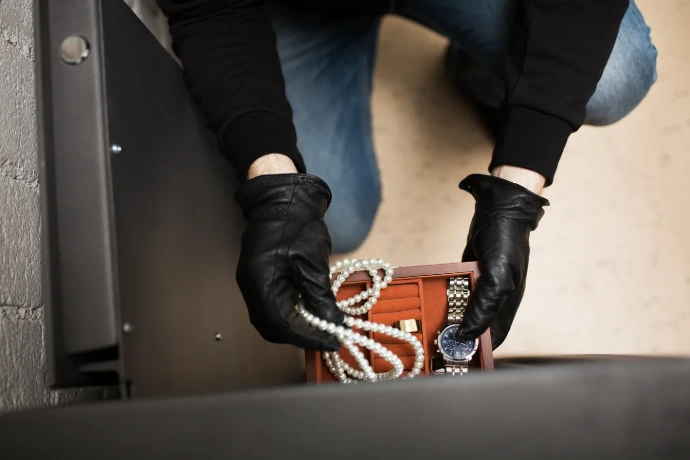
Fun fact: nearly 80% of jewellery thefts occur between early December and mid- January—a
stark reminder of the importance of both discretion and seasonal risk mitigation.
Insurers are also adapting other elements with increased scrutiny. Art appraisals, once a formality conducted every 5–10 years, are now being required every three years—with many underwriters refusing coverage without updated documentation. Collectors must now install upgraded safes, smoke and water detection systems, and provide rigorous provenance and shipping records to maintain eligibility.
Geography also matters more than ever. High-value artworks stored in disaster- prone regions like California or Florida are facing rising premiums or outright coverage denials. Wildfires, floods, and hurricanes have led insurers to reassess “aggregation risks”—the potential for catastrophic losses in concentrated areas.
Integration into Family Wealth Planning
For family offices, this evolution demands an integrated approach. Art and jewellery should be treated not just as emotional assets or generational heirlooms, but as financial instruments requiring active management. That means periodic appraisals, alignment with estate strategies, and selecting specialized insurers with deep expertise in fine assets.
In this landscape, value and vulnerability go hand in hand. The savvy family office must view insurance not as an afterthought, but as an active risk hedge—complementing the potential upside of these enduring symbols of wealth.
Closing Thought
Art is unpredictable by nature. While investment potential is appealing, true satisfaction comes from the enjoyment of ownership—an experience that is best preserved and fully appreciated when assets are thoughtfully and comprehensively insured.